Basic Information
| Field | Details |
|---|---|
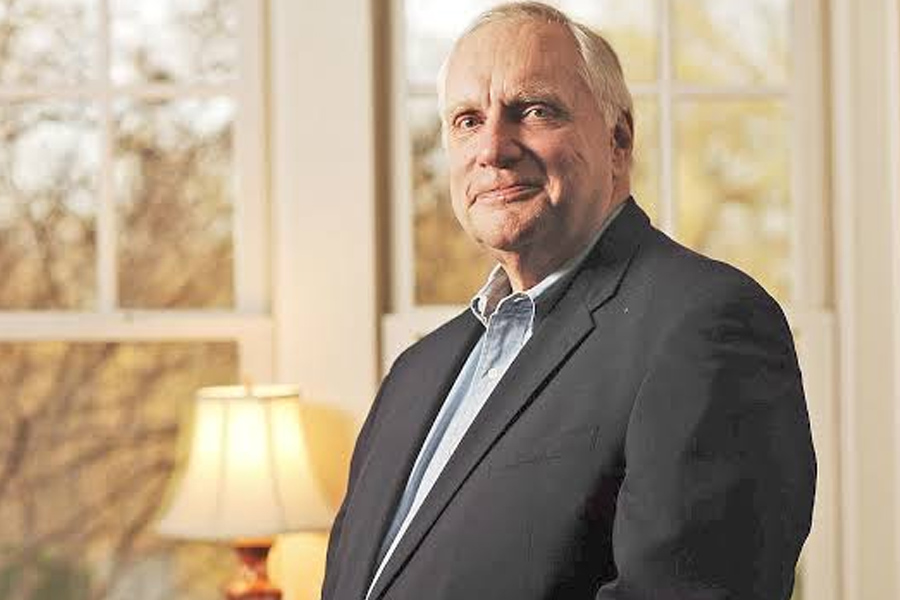
| Full Name | Webster Lee “Webb” Hubbell |
| Date of Birth | January 18, 1948 |
| Birthplace | Little Rock, Arkansas, USA |
| Education | B.S. in Electrical Engineering (1970), University of Arkansas; J.D. with honors, University of Arkansas School of Law |
| Early Athletics | Offensive tackle for the Arkansas Razorbacks; drafted by the Chicago Bears (1969, Round 8, Pick 197) before injury |
| Major Roles | Mayor of Little Rock (1979–1981); Arkansas Supreme Court (appointed 1984; briefly Chief Justice); U.S. Associate Attorney General (1993–1994) |
| Spouse | Suzanna “Suzy” Ward Hubbell |
| Children | Four (one son, three daughters); seven grandchildren |
| Current Residence | Charlotte, North Carolina (since 2010) |
| Notable Works | Friends in High Places (1997, memoir); When Men Betray (2014, novel) |
| Known For | Senior roles in Arkansas and the U.S. Department of Justice; legal troubles during Whitewater; later career as author and speaker |
Early Life and Education
Webster Hubbell grew up in a family that chased construction projects across the American South, a peripatetic childhood anchored by parents Webster Edward and Virginia Erwin Hubbell. In Little Rock’s Hall High School he lettered in three sports, then rumbled onto the gridiron at the University of Arkansas as an offensive tackle. The Razorbacks shared the Southwest Conference title in the 1968 season and capped it by upsetting undefeated Georgia in the 1969 Sugar Bowl. Drafted by the Chicago Bears that spring, he saw a professional football dream vanish with a knee injury. He pivoted. Engineering in 1970. Law school with honors soon after. The courtroom, not the locker room, would be his arena.
Rising in Arkansas: Law, City Hall, and the Supreme Court
Hubbell joined the storied Rose Law Firm in 1973 and climbed to managing partner. Public service came early: he was elected to Little Rock’s City Board of Directors (1978–1984) and, at 31, became one of the youngest mayors in the country (1979–1981). In 1984, he was appointed to the Arkansas Supreme Court, briefly serving as Chief Justice before returning to private practice. A reform-minded lawyer, he helped draft Arkansas’s 1990 ethics-in-government law, creating a five-member state ethics commission—an institutional guardrail at a moment when voters demanded higher standards.
Washington Ascendant: Associate Attorney General (1993–1994)
When Bill Clinton won the presidency in 1992, Hubbell helped guide the transition, vetting cabinet hopefuls. By April 1993, he was nominated and confirmed as Associate Attorney General, effectively the Justice Department’s chief operating officer under Attorney General Janet Reno. The scope was immense: oversight of the Department’s civil divisions and the Immigration and Naturalization Service; stewardship of a budget around $10 billion; responsibility for roughly 100,000 employees. It was a high-wire role in a tumultuous capital, and for a time he balanced it with grace.
Legal Troubles and the Fall from Power
The fall arrived swiftly. In April 1994, amid the broader Whitewater tumult, Hubbell resigned. Later that year, he pleaded guilty to mail and tax fraud tied to overbilling at the Rose Law Firm, acknowledging defrauding clients and partners of $482,410.83. He served 21 months in federal prison from 1995 to 1997. Additional allegations in 1998 asserting nearly $900,000 in unpaid taxes were ultimately dismissed by a federal appellate court, which found the prosecution had overstepped in light of his prior plea. The damage, however, was already carved into the public record—and into his finances.
Family and Personal Life
Hubbell’s personal story is anchored by his marriage to Suzanna “Suzy” Ward, whom he met in Fayetteville when she was an undergraduate. They married during law school and raised four children—one son and three daughters—and now count seven grandchildren. Known daughters include Caroline, who lives in Charlotte, and Kelley, referenced in accounts from the late 1990s. Suzy’s career reflects her resilience: she worked as a special assistant to the Secretary of the Interior during their Washington years and later built a real estate practice in Charlotte. Through legal upheaval and health crises, the Hubbell household remained a circle of loyalty and grit.
Health Crisis and the Move to Charlotte
In 2010, Hubbell confronted a life-threatening liver disease—nonalcoholic steatohepatitis—that required a transplant. Afterward, he and Suzy moved to Charlotte, North Carolina, to be nearer to family, particularly their daughter Caroline. The move marked a reset: away from Washington, closer to grandchildren, and toward the quieter rituals of recovery and reflection. Friends from old chapters reappeared at hospital bedsides, the past and present converging with a clarity that health scares often bring.
Writing, Reflection, and a Second Act
Barred from practicing law, Hubbell took to the page. His 1997 memoir, Friends in High Places, captured his arc from Little Rock to Washington and the descent that followed. Years later, he reinvented himself as a novelist. When Men Betray (2014) launched a series of legal thrillers whose protagonists navigate moral ambiguity with a lawyer’s eye and a survivor’s intuition. He also maintains a blog—The Hubbell Pew—offering reflections on law, politics, and daily observances. Speaking engagements, including a 2016 talk to the 8th Circuit Judicial Conference about his time in prison, reveal a man intent on turning scars into cautionary tales.
Financial Arc: From Affluence to Austerity
Before his conviction, Hubbell occupied the upper rungs of the legal profession and the Justice Department. The aftermath was stark. He emerged from prison to modest hourly work at a research institute, leaning heavily on family support and his wife’s income. Consulting contracts he undertook after his resignation—including work with the Riady family and Revlon—drew scrutiny but did not yield further convictions. Today, his life in Charlotte is quieter, with writing, speaking, and Suzy’s real estate work forming the financial backbone. The arc is unmistakable: a high-flyer forced to learn the mechanics of a humbler orbit.
Public Presence and Recent Mentions
Since 2016, Hubbell has largely maintained a low profile, surfacing occasionally in regional coverage and the legal community’s memory. His 2014 novel garnered national attention, and his reflections on incarceration resonated with judges and lawyers interested in the human reality behind the penal code. Social media chatter occasionally circles his past, sometimes veering into unverified speculation, but his own footprint remains sparse. He appears to prefer the measured cadence of the written word to the noisy theater of the algorithm.
Milestones at a Glance
| Year | Milestone |
|---|---|
| 1948 | Born in Little Rock, Arkansas |
| 1969 | Drafted by the Chicago Bears; football career ends due to knee injury |
| 1970 | Graduates with B.S. in Electrical Engineering |
| 1973 | Joins Rose Law Firm |
| 1979–1981 | Mayor of Little Rock |
| 1984 | Appointed to Arkansas Supreme Court (briefly Chief Justice) |
| 1990 | Drafts Arkansas ethics-in-government law |
| 1993–1994 | U.S. Associate Attorney General |
| 1995–1997 | Serves 21 months in federal prison |
| 1997 | Publishes memoir, Friends in High Places |
| 2010 | Liver transplant; moves to Charlotte, NC |
| 2014 | Publishes novel, When Men Betray |
| 2016 | Speaks at 8th Circuit Judicial Conference on prison life |
The Hubbell Family: Portrait of a Private Circle
The Hubbell family has long kept its private life private. Suzy, as spouse and partner, stands at the center—a steady hand through Washington highs, Arkansas politics, and the reckoning that followed. The couple’s four children, including Caroline and Kelley, have mostly stayed out of the spotlight, building their own lives far from the echo chambers that once surrounded their father. Seven grandchildren provide the soundtrack now: school recitals, ballgames, birthdays. For a man who once managed sprawling government portfolios, the new calendar is more intimate and arguably more enduring.
Work Achievements and Civic Footprint
- Public leadership: Mayor of Little Rock at 31; Arkansas Supreme Court appointment with a brief tenure as Chief Justice.
- Ethics reform: Principal drafter of Arkansas’s 1990 ethics-in-government law, which created a state ethics commission.
- Federal management: As Associate Attorney General, oversaw civil divisions and the INS, with operational accountability for a $10 billion budget and about 100,000 employees.
- Literary contributions: Memoir and legal thrillers that translate lived experience into narrative insight.
FAQ
Who is Webster Hubbell?
He is a former U.S. Associate Attorney General, Arkansas lawyer, mayor, and author whose career spanned public service and later writing.
What is he best known for in government?
As Associate Attorney General (1993–1994), he served as the Justice Department’s de facto chief operating officer.
What legal issues did he face?
He pleaded guilty in 1994 to mail and tax fraud related to overbilling, served 21 months, and later saw a separate 1998 case dismissed on appeal.
Where does he live now?
He has lived in Charlotte, North Carolina, since 2010.
Who is his spouse?
He is married to Suzanna “Suzy” Ward Hubbell, a real estate broker and former Interior Department official.
How many children does he have?
He has four children—one son and three daughters—and seven grandchildren.
What books has he written?
He wrote the memoir Friends in High Places (1997) and the legal thriller When Men Betray (2014), among others.
Did he serve on the Arkansas Supreme Court?
Yes, he was appointed in 1984 and briefly served as Chief Justice before returning to private practice.
Why did he leave the Justice Department?
He resigned in 1994 amid the broader Whitewater controversy and soon faced unrelated overbilling charges.
What is his public presence today?
He keeps a low profile, writes, occasionally speaks on criminal justice, and focuses on family life.